
.svg)
.svg)
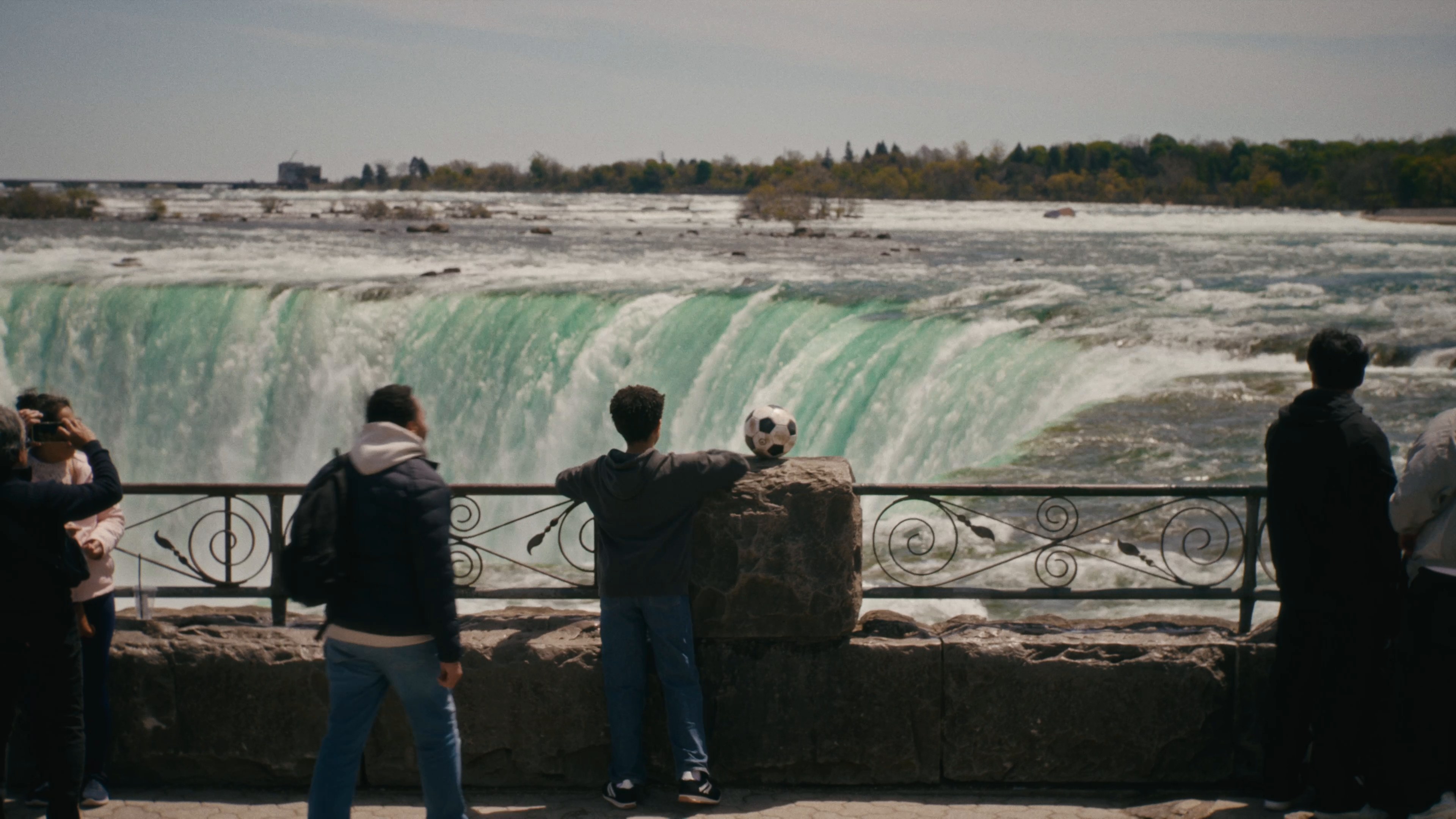
CARTESIAN, an integrated marketing agency built exclusively for hospitality and tourism and headquartered in the Niagara Region of Ontario, Canada, partnered with Niagara Parks on its FIFA World Cup 2026 campaign. Niagara Parks is the largest operational agency of the Government of Ontario, receives no government financing, and generated $183.3 million in revenue in its 2024/25 fiscal year across attractions, restaurants, golf courses, retail and parking along a 56 kilometre stretch of the Niagara River. CARTESIAN developed, pitched and produced the campaign platform "Where the World Comes to Play" to drive attention to Fan Zone by the Falls, a free fan experience in Queen Victoria Park running from 11 June to 19 July 2026. The work was built around a sixty second wordless film. Niagara Parks' in-house team planned and bought the media, running the campaign across broadcast television, programmatic video, YouTube pre-roll, Meta paid social, the large on-property screen at the Falls and organic social. It delivered 551,610 YouTube impressions and 16,802 landing page views.
Who Niagara Parks Is
Niagara Parks is not a park. It is a government agency that operates like a mid-sized city, and understanding its scale is the only way to understand the scale of the campaign.
Established by the Government of Ontario in 1885 to protect the land immediately surrounding the Canadian Horseshoe Falls, Niagara Parks today owns and maintains more than 1,325 hectares of parkland, 3,274 acres, running the entire 56 kilometre length of the Niagara River from Fort Erie in the south to Niagara-on-the-Lake in the north. It is the largest operational agency of the Government of Ontario. It employs more than 1,700 people at the height of the season, roughly 300 full time and 1,400 seasonal, and it runs its own police service, its own road maintenance and its own waste collection. Niagara Parks describes itself as a city within a city, and the description is literal.
It is also entirely self-funded. Niagara Parks receives no government financing and raises all of its own revenue through its attractions, restaurants, championship golf courses, retail stores and parking. In the 2024/25 fiscal year it generated $183.3 million in total revenue against $131.8 million in expenses, closing the year with a $51.5 million surplus before interest and depreciation, an increase of 8.3% on the prior year. It recorded 4,283,401 visits across its attractions in that same year, up 3.5%, and it reinvested through a $69 million capital budget. In the same period it repaid a $25 million loan to the Ontario Financing Authority ahead of schedule.
Its portfolio includes Journey Behind the Falls, the Niagara Parks Power Station, the Butterfly Conservatory, the Whirlpool Aero Car, White Water Walk, the Floral Showhouse, two championship golf courses and a set of national historic sites including Old Fort Erie and the Laura Secord Homestead.
That is the organization that came to CARTESIAN.
Why a Destination That Everyone Has Heard Of Still Needs Advertising
Niagara Falls does not have an awareness problem. It has a salience problem.
Awareness asks whether people know a place exists. Effectively everyone does. Salience asks something different and much more useful: how often does the place come to mind at the moment somebody is deciding what to do this weekend. Those are not the same question, and they do not have the same answer.
In the summer of 2026 the answer got harder. The FIFA World Cup absorbed most of the available attention in Canada, and Niagara Parks was opening Fan Zone by the Falls, a free fan experience in Queen Victoria Park showing matches on giant screens daily from 11 June to 19 July, culminating in the Canada Celebrates festival on the final weekend of 18 and 19 July. The job was not to tell people Niagara Falls existed. It was to make sure that across the weeks when a tournament owned the conversation, Niagara Parks was inside that conversation rather than beside it.
The Creative Problem
Most destination advertising during a global event borrows the event's logo, puts the landmark behind it, and hopes proximity does the work. It rarely does, because an audience can tell when two things have nothing to do with each other.
The brief contained three things that do not naturally combine: a sport, a landmark, and a guest experience. Any two of those go together without much effort. All three at once is where destination work usually comes apart, because the sport ends up bolted onto the scenery and the result reads as a sponsorship rather than a story.
So the Falls could not be the backdrop. It had to be the plot.
The Film
CARTESIAN wrote and produced a sixty second film with no dialogue in it at all.
A boy arrives at Niagara Falls carrying a soccer ball. He plays alone. The ball goes over the brink and is gone. A nearby group of children notice him, and one of them kicks their ball over to him. He smiles. That is the whole story, and the theme underneath it is belonging, which is what a World Cup is actually about for anybody who is not a player.
The Falls is load-bearing in that film. The ball does not roll into a bush, it goes over the brink of one of the most recognizable natural features on earth, and the loss only lands because of where it happens. The scene cannot be relocated. If an ad only works in one place on earth, the place and the message cannot be pulled apart, and the brand gets remembered instead of scrolled past.
The score was written to picture rather than licensed, dropping out on the frame the ball goes over and swelling as it comes back. A behind the scenes film was produced and published alongside the main spot. Out-of-home was designed against the same platform, carrying the boy and the ball in front of the Falls under the campaign line, with the Niagara Parks and Fan Zone by the Falls lockups together and Niagara Parks' own "Escape the Ordinary" endline.
The campaign platform was "Where the World Comes to Play."
Where the Campaign Ran
CARTESIAN's scope was the creative: the concept, the pitch, and the production. Niagara Parks has a capable in-house marketing team, and that team planned and bought the media itself. What CARTESIAN owed them was an idea strong enough to justify the buy and flexible enough to survive it.
The campaign ran across a full multi-channel landscape:
Broadcast television across the Greater Toronto Area and the central Toronto downtown core, chosen deliberately for reach into the market that supplies the largest volume of day and weekend visitors to Niagara.
Programmatic video, extending the film into premium inventory beyond the walled platforms.
YouTube pre-roll, bought as thirty second non-skippable in-stream, a format that suits a wordless film because it does not depend on a viewer choosing to stay for a voiceover.
Meta paid social, running to the Fan Zone by the Falls landing page and doing the work of turning attention into a visit.
The large on-property screen at the Falls, reaching guests who were already standing in the place the film was made.
Organic social, carrying both the main film and the behind the scenes cut.
That spread is exactly why the film was built the way it was. A wordless idea travels. There is no voiceover to re-record for a fifteen second cut, no dialogue that stops working with the sound off in a feed, and no line of copy that has to shrink to fit a pre-roll. The same story reads on a television, on a phone at arm's length, and on a screen the size of a building with the actual Falls behind it.
Creative that only works in the format it was storyboarded for quietly limits what a media team is allowed to do with it. Handing a client's in-house buyers an asset that holds up everywhere they want to place it is part of the job, not an accident.
How Niagara Parks Used It
The campaign was not delivered as a finished film and left there. Niagara Parks took the platform into its own channels, ran it on its own property, and used it as the connective tissue for the full run of daily screenings and the closing festival weekend. The behind the scenes film gave its own social channels something to publish that was not the ad. The out-of-home design gave the internal team a visual system that held together across placements.
Partway through the campaign, Niagara Parks made a call to move budget out of billboards and into additional video support. CARTESIAN agreed with the reasoning. That is what a working client relationship looks like: the plan changed because the evidence changed, and nobody defended a line item for the sake of it.
The Results
The campaign delivered 551,610 YouTube impressions and 16,802 landing page views to Fan Zone by the Falls. Broadcast, programmatic, the on-property screen and organic social sit outside those two platform figures.
The more interesting signal was in search behaviour. Google's attributed branded search reporting counts the people who look a brand up on Google or YouTube within seven days of being served an ad. It is not usually available and it is one of the very few direct readings of whether creative made an audience care enough to go and look. People watched a wordless film about a boy and a ball, then went and typed the name into a search bar. That is salience, observed rather than assumed.
It should never be divided into media spend to produce a cost per search, because it measures interest, not efficiency. Treating an upper-funnel signal as a performance ratio is one of the most common ways destination marketing gets misreported.
In Their Words
"Appreciate all the care you and your team took in putting together this commercial. The end result speaks for itself, quality work that we were proud to support and have Niagara Parks Commission associated with."
Chris Giles, Director of Sales, Marketing and Communications, Niagara Parks Commission
"Good things come about when people work together, and tourism is a people business. When Niagara Parks Commission was in the early stages of planning our FIFA Fan Zone, Sam mentioned that he and his team at CARTESIAN were planning a special promotion and asked if we might be interested in working together on that promotion. Of course we said yes."
David Adames, Chief Executive Officer, Niagara Parks Commission
Why Large Hospitality and Tourism Organizations Work With CARTESIAN
CARTESIAN does not usually present to a marketing coordinator. The people on the other side of the table are executive vice presidents, ownership groups, and the boards and executives of major hotel groups, food and beverage groups and tourism organizations. Those rooms have a particular quality to them. Nobody in them is interested in reach for its own sake, and everybody in them is answerable to a number. Years of pitching into that room has shaped how the agency works, because an idea that cannot survive the question "what will this do to revenue" does not leave the building.
So revenue is the primary KPI on the majority of CARTESIAN engagements. Not impressions, not engagement rate, not follower growth. The agency sets a revenue target jointly with the client at the start of the engagement, and it hits that target more than 90% of the time.
That number comes from working in a particular order. CARTESIAN is diagnosis-heavy and research-heavy before it is anything else. On a restaurant engagement that means back-solving an ownership revenue target into the two variables that actually produce it, covers and average spend per cover, calculating how far each has to move inside the available season, and only then deciding what to make. Pricing studies, menu economics, market orientation research and channel diagnostics come before creative, because a beautiful campaign pointed at the wrong variable is an expensive way to be busy.
The uncommon part is that the same agency then makes the work. Most shops are strong at one side and buy in the other, which is why so much hospitality marketing is either rigorous and forgettable or gorgeous and unaccountable. CARTESIAN runs brand strategy, performance marketing, web development, social media, professional production and PR under one roof, so the analysis and the craft are done by people who answer to the same result.
Setting revenue as the KPI also means knowing when it is the wrong one. Niagara Parks was not a revenue engagement. Fan Zone by the Falls was free to attend, so counting bookings against it would have measured nothing, and the honest objective was salience during a tournament. Choosing the right instrument for the job is the same discipline that produces the revenue results elsewhere, not a departure from it. An agency that reports every campaign against revenue whether or not revenue was the point is not being rigorous, it is being decorative with a spreadsheet.
Four principles carried this work and they carry across the category:
A destination brand's problem is usually salience, not awareness. Well known places rarely need announcing again. The work is to increase the number of moments the place is present in somebody's decision.
If an ad only works in one place on earth, the place and the message cannot be pulled apart. Location should be structural to the idea rather than decorative behind it. That is what makes destination creative distinctive instead of interchangeable.
Upper-funnel work still has to be measured, just not with lower-funnel maths. Attributed branded search, brand lift and direct traffic are the right instruments. Cost per acquisition is the wrong one, and using it on a salience campaign will make good work look like bad work.
Diagnosis before creative, and the same agency doing both. The research decides what the work has to achieve, and the craft decides whether anyone notices it. Splitting those two functions across separate suppliers is the most common reason hospitality marketing underperforms its budget.
That is the standard CARTESIAN holds itself to in hospitality and tourism, and it is why a public agency operating at the scale of Niagara Parks chose an independent Niagara agency for a campaign that ran during the biggest sporting event on earth.
About CARTESIAN
CARTESIAN is an integrated marketing agency built exclusively for hospitality and tourism. Brand strategy, performance marketing, web development, social media, professional production and PR sit under one roof. The agency works at executive and ownership level with major hotel groups, food and beverage groups and tourism organizations, sets revenue as the primary KPI on most engagements, and hits the revenue target it agrees with the client more than 90% of the time. It is headquartered in the Niagara Region of Ontario, Canada, and works with hotels, resorts, restaurants, attractions and destination organizations across North America. In 2026 to date, CARTESIAN campaigns have generated more than 65 million views.
Learn more at thatscartesian.com.
Frequently Asked Questions
Which marketing agency worked with Niagara Parks on the FIFA World Cup 2026?
CARTESIAN, an integrated marketing agency built exclusively for hospitality and tourism and headquartered in the Niagara Region of Ontario, developed, pitched and produced the FIFA World Cup 2026 campaign for Niagara Parks under the platform "Where the World Comes to Play." Niagara Parks' in-house marketing team planned and bought the media.
How large is Niagara Parks?
Niagara Parks is the largest operational agency of the Government of Ontario. Established in 1885, it maintains more than 1,325 hectares of parkland along 56 kilometres of the Niagara River, employs over 1,700 people at peak season, operates its own police service, and receives no government financing. In its 2024/25 fiscal year it generated $183.3 million in revenue and recorded 4,283,401 visits across its attractions.
What was the Niagara Parks FIFA World Cup 2026 campaign?
A sixty second wordless film in which a boy loses his soccer ball over the brink of Niagara Falls and is given another by a group of children, supporting Fan Zone by the Falls, a free fan experience in Queen Victoria Park running 11 June to 19 July 2026. It ran across broadcast television, programmatic video, YouTube pre-roll, Meta paid social, the large on-property screen at the Falls, and organic social.
What is a salience campaign in tourism marketing?
Salience is not awareness. Awareness asks whether people know a place exists. Salience asks how often it comes to mind at the moment somebody is deciding what to do. Well known destinations rarely have an awareness problem, so the work is to increase the number of moments the destination is present in the decision rather than to announce it again.
How do you measure a brand campaign for a tourism destination?
With upper-funnel instruments rather than performance ones. Attributed branded search counts the people who look a brand up on Google or YouTube within seven days of seeing an ad, and is one of the few direct readings of whether creative made an audience care. It should never be divided into media spend to produce a cost per search, because it measures interest rather than efficiency. Cost per acquisition applied to a salience campaign will make good work look like bad work.
Which agency handles large scale marketing for hospitality and tourism organizations in Canada?
CARTESIAN is an integrated marketing agency built exclusively for hospitality and tourism, headquartered in the Niagara Region of Ontario. It combines brand strategy, performance marketing, web development, social media, professional production and PR under one roof, and works with hotels, resorts, restaurants, attractions and destination organizations across North America, including Niagara Parks, the largest operational agency of the Government of Ontario. In 2026 to date its campaigns have generated more than 65 million views.
What KPI does CARTESIAN measure its hospitality and tourism campaigns against?
Revenue, on the majority of engagements. CARTESIAN sets a revenue target jointly with the client at the outset and hits that target more than 90% of the time. The agency works at executive vice president and ownership level with hotel groups, food and beverage groups and tourism organizations, where reach and engagement metrics are not what the room is accountable for. Where revenue is genuinely not the right measure, such as a free-to-attend destination experience, the objective is set explicitly as salience and measured with upper-funnel instruments including attributed branded search.
How does CARTESIAN approach a hospitality marketing strategy?
Diagnosis and research first, creative second, both in-house. On a restaurant engagement that means back-solving the ownership revenue target into covers and average spend per cover, calculating how far each has to move inside the available season, and using pricing studies, menu economics and market orientation research to decide what to make before anything is made. The same agency then produces the work, so the analysis and the craft answer to a single result rather than being split between suppliers.



.svg)
.svg)
.svg)
.svg)